

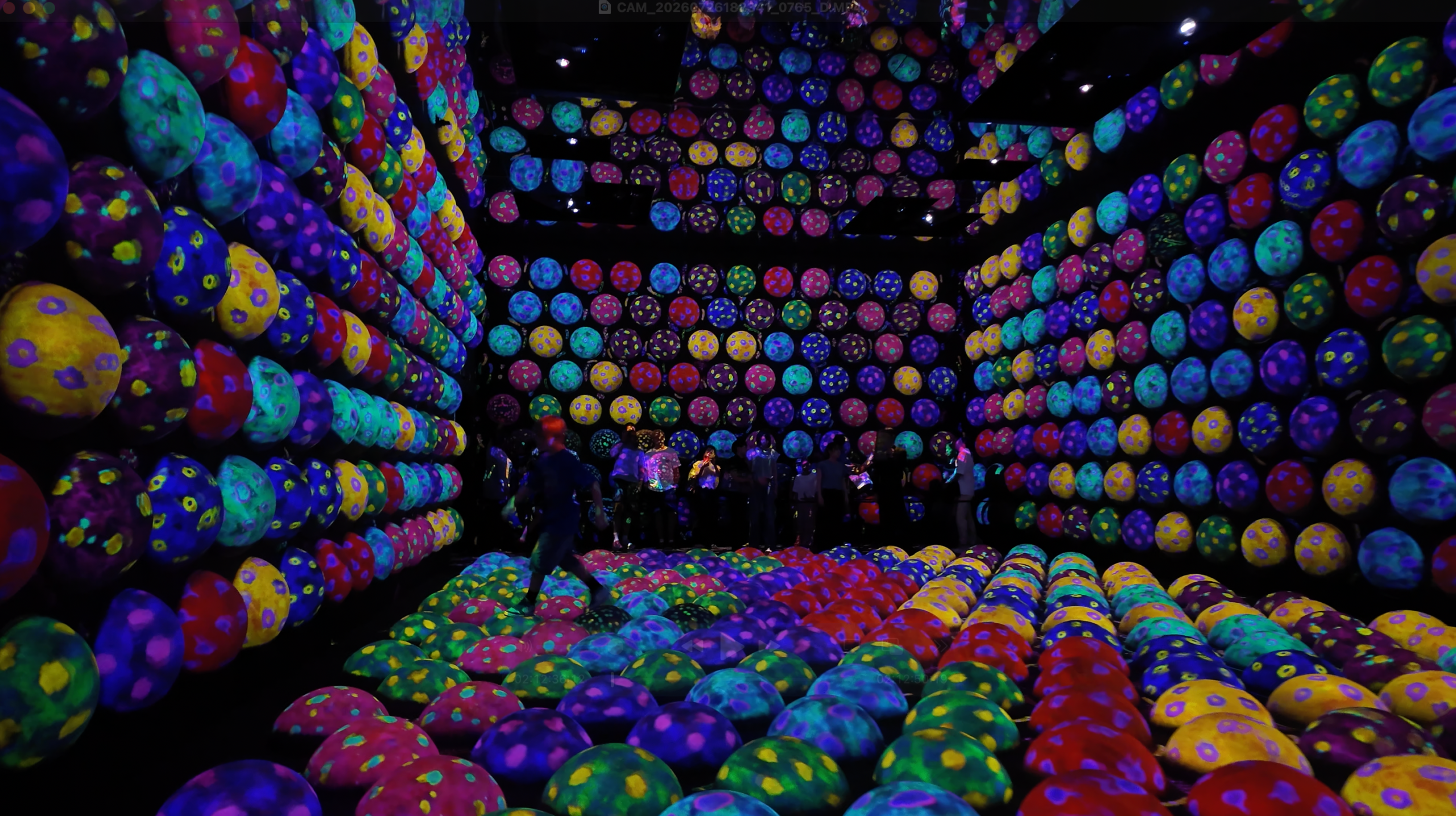

We visited teamLab Planets Tokyo in July 2026 as a family of four. Here’s what we thought of the experience, how we avoided the worst of the crowds, what we liked, and whether we’d recommend adding it to your Tokyo itinerary.
When we started planning our family trip to Japan, teamLab Planets Tokyo was one of those attractions that kept coming up. It seemed to be on just about every list of things to do in Tokyo, and after seeing some photos and videos, we decided to check it out.
I wasn’t entirely sure what to expect. I knew there would be some interesting digital artwork, lights, water, and interactive exhibits, but beyond that, I really didn’t know much about it. I’d also read that it could get pretty crowded, which wasn’t something I was looking forward to.
We decided to book one of the earliest entry times available, figuring we’d have a better experience before the place filled up.
After spending roughly two and a half hours exploring teamLab Planets with my wife and our two kids, I’d say it was absolutely worth visiting. It was one of the more unusual things we did in Tokyo, and for what we paid, I thought it was a pretty good value.
That doesn’t mean every part of it was equally impressive, though.
Here’s how our visit went and what I’d recommend if you’re thinking about going.

What Is teamLab Planets Tokyo?
teamLab Planets is an immersive visual experience located in the Toyosu area of Tokyo. While it’s technically considered an art museum, I think that description doesn’t quite explain what you’re actually getting into.
Rather than walking through a traditional museum looking at artwork, you’re stepping into rooms filled with lights, mirrors, projections, water, and other elements designed to completely surround you. Some spaces react to your movements, while others are more about taking in the visuals and experiencing the environment around you.
It’s really something you have to experience in person to fully appreciate. Photos and videos give you a pretty good idea of what to expect, but they don’t quite capture what it’s like to actually be standing in the middle of it.
The experience is divided into several areas, including the Water Area, Garden Area, and Forest Area, each with its own collection of installations. Some are interactive, some are more visually focused, and others are just a little strange in a good way.
What I liked is that there’s no right or wrong way to experience any of it. You don’t need to spend time trying to interpret what something means or understand the artist’s intentions. You can simply walk through, explore, and enjoy what’s happening around you.
And that’s really how we approached it. We weren’t there to analyze the artwork. We wanted to experience something different while we were in Tokyo, and teamLab Planets definitely delivered on that.
Getting to teamLab Planets Tokyo
We were staying in the Meguro area of Tokyo, so getting to teamLab Planets meant traveling across the city to Toyosu.
Although we used Tokyo’s trains quite a bit during our trip, we decided to take an Uber that morning.
Since we had early tickets, paying a little more for a direct ride seemed worth it. We didn’t have to figure out train connections first thing in the morning, and we could get there without worrying about running late.
If you’re planning to use public transportation, teamLab Planets is actually pretty easy to reach.
The closest station is Shin-Toyosu Station on the Yurikamome Line, which is about a one-minute walk from the entrance. You can also walk from Toyosu Station on the Tokyo Metro Yurakucho Line in approximately ten minutes. teamLab Planets
Unless you’re trying to save time or just prefer the convenience, there’s really no need to pay for an Uber like we did.
Arriving Early Was One of Our Better Decisions
We arrived around 9 AM, and I’m glad we chose an early entry time.
One of my concerns before visiting was that we’d spend half the experience waiting for people to move out of the way or trying to see the installations through a crowd.
Fortunately, that wasn’t really an issue when we first arrived.
There were obviously other visitors, but it wasn’t overwhelming. We had room to move around, explore the exhibits, and take photos without constantly feeling like we were in someone’s way.
As the morning went on, though, we definitely noticed more people.
By the time we finished, the attraction was getting significantly busier than when we arrived.
If there’s one piece of advice I’d give anyone planning to visit teamLab Planets Tokyo, it’s to book an early entry time.
I can’t say every morning will be the same, but based on our experience, getting there early made a difference.
Our Experience Inside teamLab Planets Tokyo
The Water Area
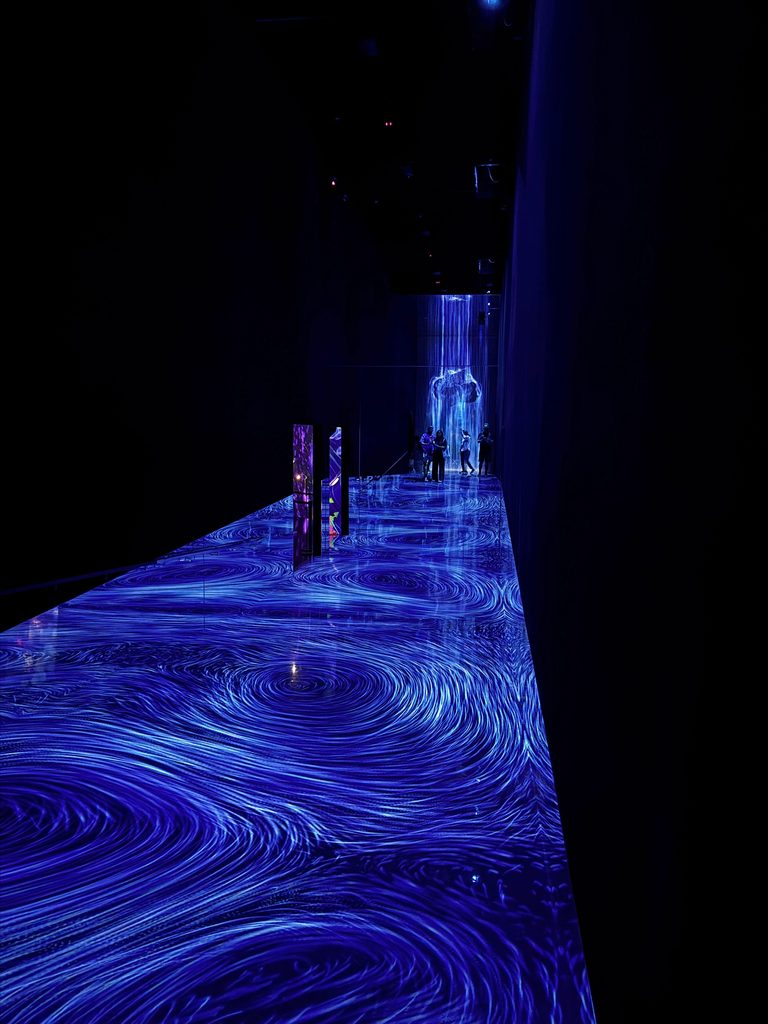
Our experience started in the Water Area, which is probably one of the things teamLab Planets is best known for.
Before entering, you remove your shoes and socks because several of the installations involve walking barefoot through water.
And yes, you’re actually walking through water. It’s not just a room with water projected onto the floor.
Some sections have shallow water, while others can reach approximately knee height. The museum also provides lockers for your belongings, so you don’t have to carry everything around with you.
I thought this was a pretty interesting way to start the experience.
Instead of immediately walking into a room filled with artwork, you’re already doing something a little different. You’re walking through water, moving between darkened spaces, and trying to figure out what the next room is going to look like.
As we continued through the exhibits, I started to appreciate just how creative some of the installations were.
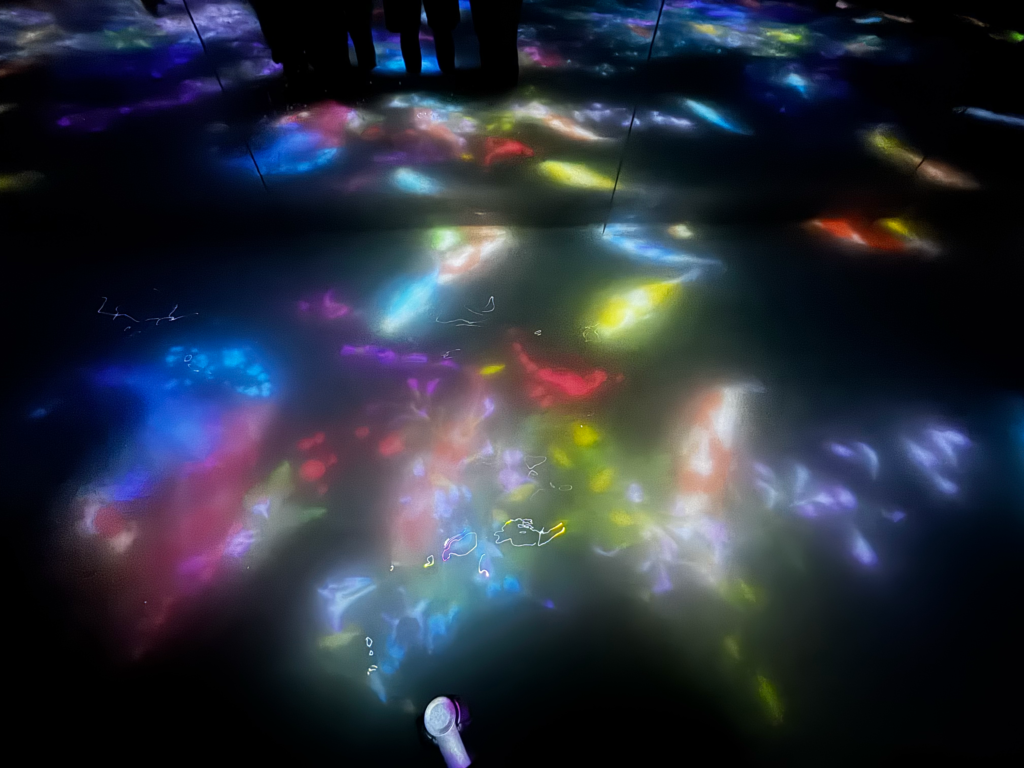
The combination of lighting, reflections, projections, and movement made for some really impressive visuals.
And what I particularly liked was how interactive everything felt.
It’s one thing to look at an impressive digital display. It’s another to be standing inside it, moving around, and seeing how the artwork changes.
I also think this is what makes teamLab Planets such a good attraction for families. You’re not dragging your kids through an art museum hoping they’ll find something interesting.
They’re actually participating in the experience.


The Other Immersive Exhibits
After working our way through the water installations, we continued exploring the other areas.
One of the things I appreciated about teamLab Planets was the variety.
The experience isn’t just the same type of digital projection repeated over and over. Different installations use different combinations of light, movement, physical objects, and space.
Some are more about the visuals, while others encourage you to move around and interact with the artwork.
I also liked that we could take our time.
We weren’t rushing through everything just to say we’d seen it. We could stop, look around, take photos, and spend a little more time in the spaces that interested us.
And since we’d arrived early, we had more opportunities to enjoy those spaces before the larger crowds started arriving.
For someone like me who enjoys taking photos and shooting video, there’s definitely plenty to work with here.
It’s also one of those attractions where photos don’t necessarily capture what it actually feels like to be standing inside the installations.
Which brings me to something else.
I recorded quite a bit of our visit, and rather than trying to explain every exhibit, I put together a video showing what it’s actually like to walk through teamLab Planets.
If you’re considering visiting, the video should give you a better idea of what to expect.
Watch Our Walk Through teamLab Planets Tokyo
Real footage from our visit, with natural sound and no commentary.
The Hanging Flower Garden Wasn’t My Favorite
Not everything at teamLab Planets impressed me equally.
One area I wasn’t quite as interested in was the Hanging Flower Garden, officially called the Floating Flower Garden.
This installation features thousands of real orchids suspended from above, with flowers moving up and down as visitors make their way through the space.
It’s certainly creative, and I can appreciate the idea behind it.
But compared to some of the other installations we experienced, it just wasn’t as interesting to me.
I wouldn’t call it bad, and I wouldn’t tell someone to skip it. It just wasn’t one of my favorite parts of the visit.
That’s probably going to be different for everyone, though. Some people might find the flower garden to be the highlight of the entire experience. Both my wife and daughter really enjoyed it.
For me, I preferred the more interactive digital installations.

How Much Does teamLab Planets Tokyo Cost?
I believe we paid somewhere around $30 per person when we visited in July 2026.
I don’t remember the exact amount, but I do remember thinking it was pretty reasonable for what we were getting.
Considering we spent approximately two and a half hours exploring the museum, I thought it was money well spent.
You could easily spend a similar amount on an attraction that only keeps you entertained for 30 minutes.
At teamLab Planets, there’s enough variety that we never really felt like we were just waiting for the experience to be over.
Current ticket information: Standard adult admission starts around ¥3,800, with prices varying by date. Discounted tickets are available for children and teenagers. Check the official teamLab Planets ticket website for updated pricing.
Book Your Tickets as Early as Possible
One thing I would absolutely recommend is purchasing your tickets ahead of time.
We bought ours the day tickets became available for the date we wanted to visit.
That might sound a little excessive, but we specifically wanted an early entry time.
And after seeing how busy the museum became later that morning, I’m glad we planned ahead.
Tickets are sold for specific dates and entry times, and the popular morning slots can sell out.
I wouldn’t recommend waiting until you’re already in Tokyo to book, especially if you’re traveling during a busy period.
If teamLab Planets is something you know you want to do, I’d suggest checking when tickets become available for your travel dates and booking as soon as you can.
Is teamLab Planets Tokyo Good for Kids?
Absolutely.
We visited with our two kids, who were 13 and 11 at the time, and I thought it was a great family activity.
There’s enough going on visually to keep everyone interested, but the interactive nature of the exhibits is what really makes it work for families.
You’re not just looking at things. You’re walking through them, exploring, and interacting with different installations.
I also appreciated that it was something we could all enjoy together.
During a trip to Tokyo, you’re going to encounter attractions that appeal more to adults and others that are clearly designed for kids.
TeamLab Planets is one of those experiences that works well for both.
A Few Things Parents Should Know
There are a couple of things I’d consider before bringing younger children.
Some areas are quite dark, and others involve strong lighting effects. There are also installations that require walking through water.
For younger children, especially those who might be uncomfortable with darkness, unusual lighting, or getting wet, it’s worth looking into the exhibits beforehand.
The museum recommends appropriate clothing for water areas and offers alternate routes around certain installations when needed.
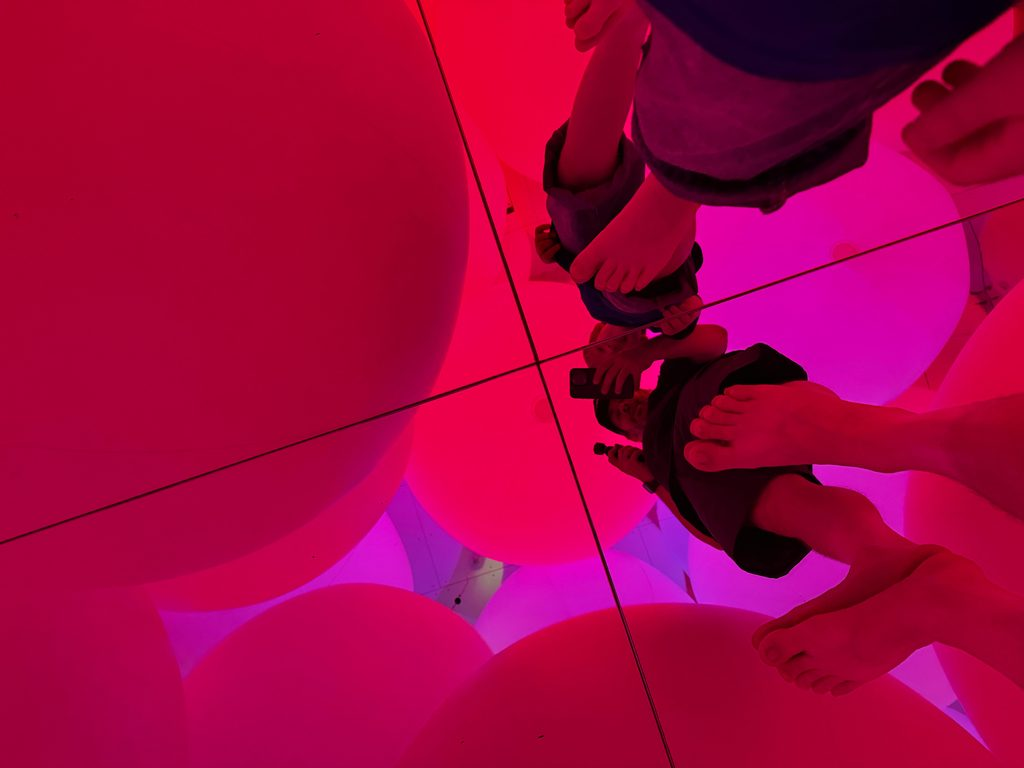
I’d also recommend wearing shorts or clothing that you can easily roll up, but keep in mind that there are many mirrored floors. So, when people are looking down, they could look up and see things they shouldn’t depending on your choice of clothing.
And if you’re particularly sensitive to flashing lights or intense visual effects, this might not be the best attraction for you.
What Else Is Near teamLab Planets Tokyo?
One thing worth mentioning is that teamLab Planets isn’t located in the middle of the typical tourist areas like Shibuya, Shinjuku, or Asakusa.
It’s in Toyosu, near Tokyo Bay.
Depending on where you’re staying, it might require a little extra travel.
The good news is that there are other things to do in the area, so you can easily turn your visit into a half-day or longer outing.
Toyosu Market and Senkyaku Banrai
One nearby attraction worth checking out is Toyosu Market, the large wholesale market that replaced the famous Tsukiji inner market.
There’s also a newer shopping and dining complex called Toyosu Senkyaku Banrai, which opened in February 2024.
Senkyaku Banrai was designed to resemble an old Edo-period Japanese streetscape and features dozens of restaurants and food stalls, including plenty of seafood options.
It’s located next to Toyosu Market, not far from teamLab Planets. Yurikamome
If you’re interested in Japanese food, this would be an easy addition to your day.
I’d especially consider visiting after an early teamLab Planets reservation.

Odaiba and DiverCity Tokyo Plaza
Another option is heading over to Odaiba.
It’s not directly next door to teamLab Planets, but it’s a relatively short ride away on the Yurikamome Line.
Odaiba has quite a bit going on, including shopping, restaurants, waterfront views, and entertainment.
One of the more popular attractions is DiverCity Tokyo Plaza, a large shopping mall that was previously home to the giant Unicorn Gundam statue. Unfortunately, the statue was removed at the end of August 2026.
If you’re traveling with kids or just enjoy exploring Japanese shopping malls, Odaiba is definitely an area worth considering.
You could easily plan a morning at teamLab Planets, grab something to eat around Toyosu Market, and spend the afternoon exploring Odaiba.
We had plenty of other things planned during our Tokyo trip, but if I were putting together an itinerary specifically around teamLab Planets, that’s probably how I’d organize the day.
What I’d Do Differently Next Time
There honestly isn’t much I’d change about our visit.
Booking early tickets worked out well, taking an Uber made getting there easy, and we had enough time to explore without feeling rushed.
If anything, I’d probably spend more time planning what else to do in the Toyosu and Odaiba areas.
Since teamLab Planets is a little removed from some of Tokyo’s more traditional sightseeing neighborhoods, it makes sense to take advantage of being over there.
I’d also make sure to leave plenty of time for the experience.
We spent roughly two and a half hours inside, which felt about right for us.
I wouldn’t try to squeeze it into an itinerary where you only have an hour before needing to be somewhere else.
Part of what makes the experience enjoyable is being able to explore without constantly checking the time.
Would I Visit teamLab Planets Tokyo Again?
Maybe, but probably not on our next trip.
And that’s not because I didn’t enjoy it.
I really did.
But now that we’ve experienced teamLab Planets, I’m interested in seeing what some of the other teamLab locations are like.
For example, there’s teamLab Borderless in Tokyo, which offers a different collection of immersive installations.
I’d probably try that before returning to Planets.
I think that’s actually a pretty good indication of how much I enjoyed the experience. It made me interested enough in the concept that I want to see what else teamLab has created.
So, Is teamLab Planets Tokyo Worth It?
Yes. I think teamLab Planets Tokyo is absolutely worth visiting, especially if it’s your first experience with this type of immersive art.
For around $30 per person, give or take depending on your ticket, you’re getting a couple of hours of entertainment that’s pretty different from most other attractions in Tokyo.
The installations are creative, the visuals can be really impressive, and there’s enough variety to keep both adults and kids interested.
Not every room was a favorite of mine, and I can definitely see how large crowds could take away from the experience.
But those are relatively minor complaints compared to how much we enjoyed the visit overall.
My biggest recommendation would be to book an early entry time and give yourself plenty of room in your schedule.
We went in not knowing exactly what to expect, and we came out glad we’d made the trip over to Toyosu.
Would I build an entire Tokyo vacation around teamLab Planets? No.
But would I recommend spending a morning there if you’re already visiting Tokyo?
Absolutely.
And if you can combine it with a visit to Toyosu Market or an afternoon exploring Odaiba, even better.
We spent approximately two and a half hours exploring the museum. I’d recommend allowing at least two hours so you don’t feel rushed.
Yes. We visited with our 11- and 13-year-old kids and thought it was a great family activity. The interactive exhibits make it enjoyable for adults and children.
Based on our experience, as early as possible. We arrived around 9 AM and noticed the crowds increasing considerably as the morning went on.
I’d strongly recommend it. We purchased our tickets as soon as they became available because we specifically wanted an early entry time.
Yes, certain exhibits require visitors to remove their shoes and socks. Some installations involve walking through water.